Door 02 · 26 December

Why the 26th Belongs to Football

Leftover turkey sandwiches, a new scarf from under the tree and a walk to the ground with the whole family. Boxing Day football is one of Britain's best-loved holiday habits. Here is where it came from.

01

The oldest fixture of all

On 26 December 1860, Sheffield FC played Hallam FC at Sandygate Road in Sheffield. It is widely recognised as the first ever match between two separate football clubs. Sandygate is still in use today and is often called the oldest football ground in the world. So the very first inter-club game was, rather wonderfully, a Boxing Day game.

02At a glance
  • 1860: Sheffield FC v Hallam FC
  • 1963: 66 goals in ten top-flight games
  • Today: a full English programme on most 26 Decembers
03

10–1

Fulham v Ipswich Town, Boxing Day 1963.

04
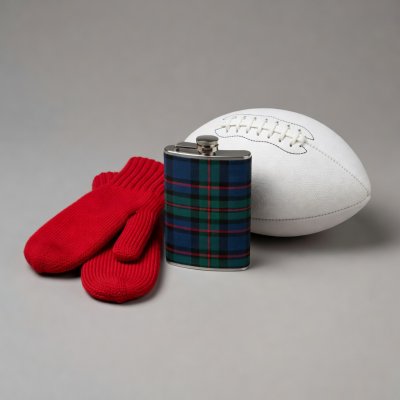
A tartan flask and red mittens beside a white football on a plain grey surface
05

A day off, and a crowd to fill it

Boxing Day takes its name, most historians agree, from the old custom of giving "Christmas boxes" of money or gifts to servants, tradespeople and workers on the day after Christmas. It became a bank holiday in England, Wales and Ireland under the Bank Holidays Act 1871. For working families in industrial towns, it was one of the few days of the year when the mills, mines and shops were shut and everyone was free at the same time.

Football clubs noticed. As the professional game grew after the Football League was founded in 1888, the holiday became a chance to draw huge crowds. Clubs liked to schedule local derbies, which meant shorter journeys by train and a bigger, louder home crowd. A neighbour-against-neighbour match after Christmas dinner felt like a natural extension of the family celebrations.

06

The goal-feast of 1963

If you want one Boxing Day to tell the grandchildren about, it is 26 December 1963. Ten First Division matches in England produced 66 goals. Fulham beat Ipswich Town 10–1, and Blackburn Rovers won 8–2 away at West Ham United. Frozen and muddy pitches, tired defenders and attacking tactics all played a part. It is still talked about as the highest-scoring day in English top-flight history.

07

Back-to-back reunions

For decades, clubs often played the same opponent twice over the holiday: once on Christmas Day and again on Boxing Day, swapping home and away. That had odd results. Two days after the 1963 drubbing, Ipswich and Fulham met again in a much more modest return game. Rematches like these gave supporters a second helping of rivalry and saved clubs on travel.

08

Not everyone plays

Boxing Day football is very much a British and Irish custom. Germany's Bundesliga traditionally stops for a winter break over Christmas and New Year, as do leagues in many colder countries. Spain's La Liga has usually rested over the holiday too, though the precise dates vary. Fans from abroad often find English holiday football one of the most charming things about the game here, and many travel specially to experience it.

In Scotland the picture is a little different. Christmas was not a public holiday there until 1958, and New Year was the bigger celebration. Old Firm derbies and other big Scottish fixtures have often fallen on or around 2 January, the Ne'erday holiday, rather than Boxing Day.

09
Warm fairy lights wound through a small white goal net against a plain dark wall
10

Family rituals in the stands

Ask any regular and they will tell you that Boxing Day crowds feel different. There are more children, often in brand-new shirts. There are grandparents who only go once a year. There are novelty hats, flashing jumpers and the odd inflatable reindeer. Many clubs hand out festive programmes or play carols before kick-off, and in the lower leagues it is common to see players' families in the stands too.

Some families have rituals that have lasted generations: the same pub for lunch, the same route to the turnstiles, the same seats bought as a Christmas present. Lower-league and non-league clubs often record some of their biggest attendances of the season on the 26th, as people who normally watch on television decide to see a match in person.

Try this at home: before you set out on the 26th, ask the oldest person at the table about their first Boxing Day game. You may well uncover a story worth sending to us.